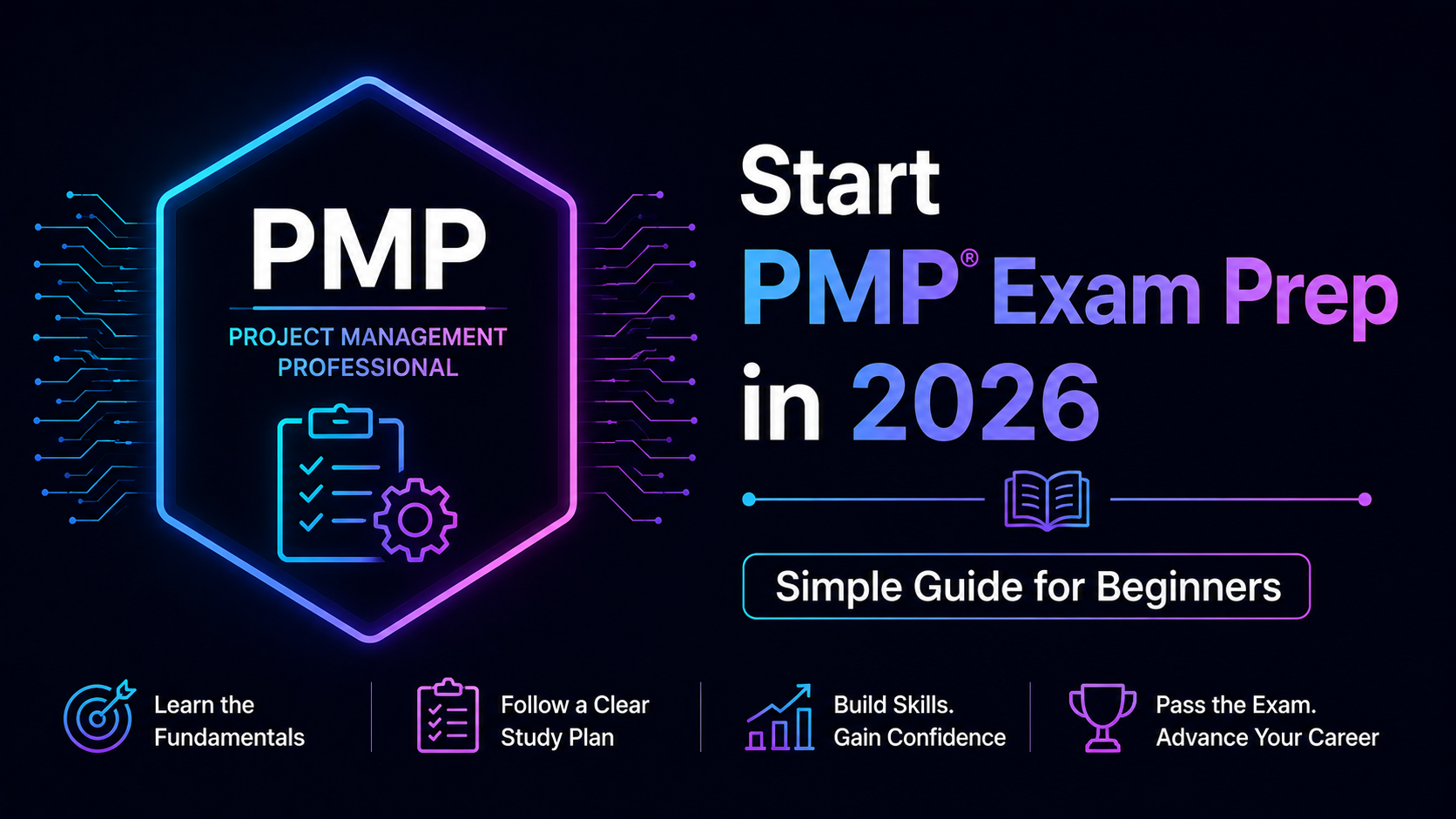
Starting PMP exam prep in 2026 can feel confusing, especially because PMI is updating the PMP exam on July 9, 2026. The updated exam adds stronger focus on AI, sustainability, stakeholder engagement, outcomes, and value delivery. It also changes domain weights to People 33%, Process 41%, and Business Environment 26%.
For beginners, the best approach is simple: understand the exam, check your eligibility, follow the official outline, study one section at a time, and practice with scenario-based questions.
Step 1: Understand What the PMP Exam Is
The PMP, or Project Management Professional certification, is designed for people who lead and manage projects. It is not only for construction, IT, or engineering. PMP applies across industries because project management skills are needed in many workplaces.
The exam tests how well you handle people, processes, business goals, project risks, delivery methods, and real workplace situations. PMI also explains that PMP questions are mapped to the Exam Content Outline, so the outline should guide your preparation.
Step 2: Know Which Exam Version You Are Taking
This is very important in 2026. If you take the PMP exam before July 9, 2026, you should prepare with the current exam outline. If you take it from July 9, 2026 onward, you should prepare with the updated PMP Exam Content Outline. PMI’s exam prep page clearly separates the current outline from the new exam outline for candidates testing from July 9 onward.
| If Your Exam Date Is | What to Use | Main Advice |
|---|---|---|
| Before July 9, 2026 | Current PMP ECO | Continue with current study materials |
| July 9, 2026 or later | Updated PMP ECO | Study AI, sustainability, value, and new domain weights |
| Not booked yet | Decide first | Choose your exam version before buying resources |
Step 3: Check PMP Eligibility First
Before studying deeply, check whether you meet PMP eligibility requirements. PMP is not a beginner certification in the strict sense. It is meant for project professionals with experience.
PMI’s updated PMP ECO includes eligibility details and also notes that candidates who do not meet PMP requirements may consider CAPM as another project management certification path.
This matters because some beginners start studying PMP without checking whether they can apply. If you are new to project management, CAPM may be a better starting point.
Step 4: Start With the Exam Content Outline
The Exam Content Outline should be your first study document. Do not begin with random YouTube videos, long notes, or old PDFs. The ECO tells you what PMI expects from a project manager.
For the July 2026 version, the exam has three domains:
- People: 33%
- Process: 41%
- Business Environment: 26%
The updated outline also confirms that predictive, adaptive/agile, and hybrid approaches appear across the exam instead of being limited to one separate section.
Step 5: Study Project Management Basics
After reading the ECO, build your foundation. Beginners should understand common project terms before moving into difficult scenario questions.
Study these basics first:
- Scope
- Schedule
- Cost
- Quality
- Risk
- Resources
- Communication
- Stakeholders
- Procurement
- Change control
- Project lifecycle
- Agile, predictive, and hybrid methods
These topics are not disappearing in 2026. They are being tested in more practical ways, so you need to understand how they work in real project situations.
Step 6: Give Extra Time to Business Value
One of the biggest changes in the 2026 PMP exam is the higher weight of the Business Environment domain. It increases to 26%, which means candidates need stronger understanding of business outcomes, value delivery, strategic alignment, and external business impact.
This means you should not only ask, “Was the project completed?” You should also ask, “Did the project deliver value?”
Study topics like benefits, compliance, stakeholder value, organizational goals, market changes, and long-term impact.
Step 7: Practice Scenario-Based Questions
PMP is not a memory-only exam. PMI’s updated ECO explains that candidates must apply project management concepts and experience to job situations through scenario-based questions.
This is why practice questions matter. They teach you how PMI asks questions and how to choose the best answer when multiple options look correct.
When practicing, do not only check the right answer. Read the explanation. Understand why other options are weaker. This habit improves judgment.
You can use Cert Mage once during your preparation if you want PMP-style practice questions to test your readiness before the final exam.
A detailed explanation of this topic is available in a YouTube video published by Cert Mage: 🔻
Step 8: Learn the New 2026 Topics
The updated PMP exam includes more attention to modern project work. PMI highlights AI, sustainability, stakeholder engagement, outcomes, and value as key focus areas for the 2026 update.
For AI, learn how project managers may use tools for planning, reporting, risk review, communication, and decision support. You do not need to become a technical AI expert.
For sustainability, understand long-term project impact. Projects may affect cost, people, environment, operations, and reputation.
Step 9: Make a Simple Study Schedule
Beginners should avoid complex study plans. A simple 8 to 12 week plan works better for many candidates.
Example plan:
- Weeks 1–2: Read ECO and learn PMP basics
- Weeks 3–4: Study People and team topics
- Weeks 5–6: Study Process topics
- Weeks 7–8: Study Business Environment and value
- Weeks 9–10: Practice questions and review mistakes
- Weeks 11–12: Full mock exams and weak area revision
If you are working full-time, study one to two hours daily. Consistency is more useful than studying for eight hours once a week.
Step 10: Review Like a Project Manager
Your review should be active. Do not only reread notes. Create short summaries, explain concepts in your own words, and connect every topic to a real project situation.
Ask questions like:
- What should the project manager do first?
- Who should be involved?
- What creates the most value?
- What reduces risk?
- What supports collaboration?
- What aligns with the business goal?
This mindset helps you answer PMP questions more confidently.
For a brief visual overview, check out Cert Mage’s recent update on X (Twitter).
Final Words
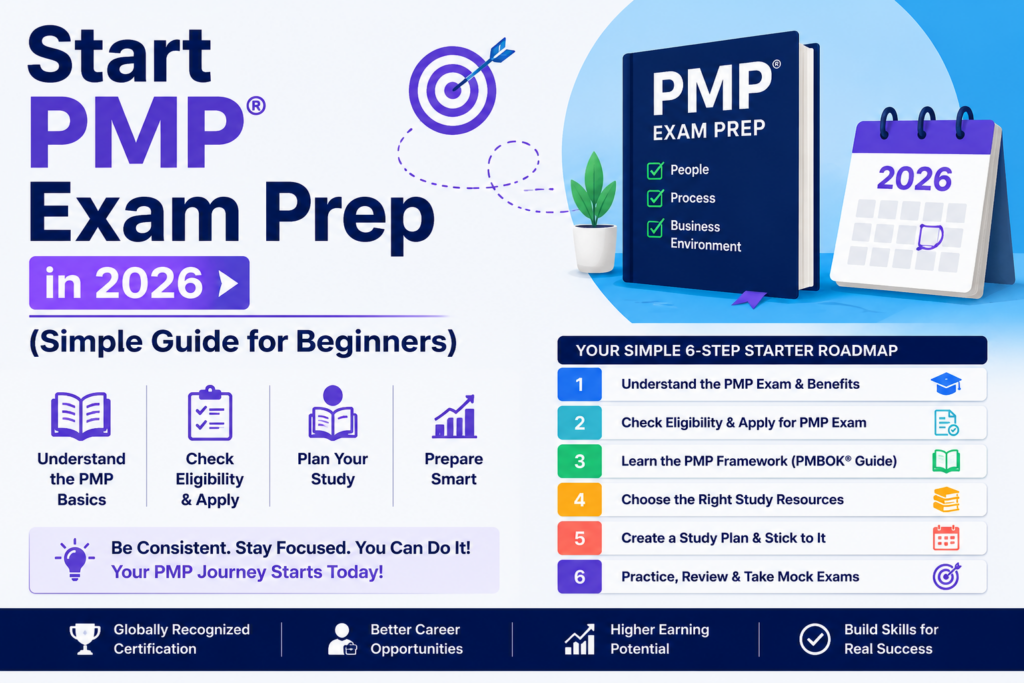
Starting PMP exam prep in 2026 requires a clear plan because the exam is changing on July 9, 2026. First, decide which exam version you will take. Then use the correct Exam Content Outline, study the three domains, practice scenario-based questions, and give special attention to value delivery, AI, sustainability, and stakeholder engagement.
PMP preparation becomes easier when you study with structure. Do not rush. Build concepts, practice regularly, review mistakes, and prepare like someone who is ready to lead real projects.
More → PMP Exam Updated Changes 2026: What’s New and What to Study