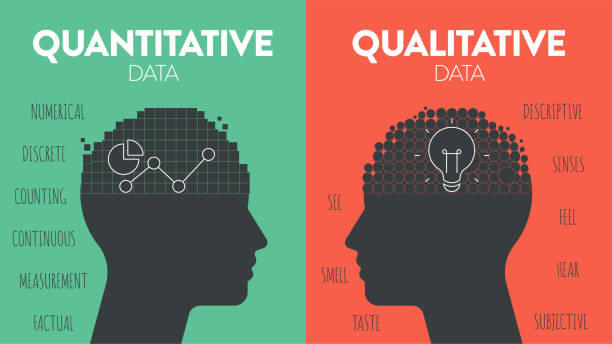
Choosing between qualitative and quantitative research is one of the most important decisions a student makes when planning a dissertation. The approach you select shapes your entire study, from how you collect data to how you interpret results and present conclusions. Understanding the strengths, limitations, and applications of both methods is essential for producing a strong, credible academic work. In the context of Comparing Qualitative and Quantitative Approaches in Dissertations, this guide offers a clear, practical explanation to help you make an informed choice aligned with your research goals.
Understanding the Core of Dissertation Research Methods
Dissertation research is broadly divided into two main approaches: qualitative and quantitative. While both aim to generate knowledge and answer research questions, they differ significantly in how they understand and analyze information. A solid grasp of these foundations is essential for building a coherent and academically sound dissertation.
What qualitative research means
Qualitative research focuses on understanding meaning, experiences, and perspectives. It is often used in fields where human behavior, emotions, and social contexts are central. Instead of numerical data, qualitative studies rely on interviews, focus groups, observations, and textual analysis. The goal is not to measure but to interpret, providing rich, detailed insights into complex issues.
This approach is particularly valuable when exploring topics that are not easily quantified, such as cultural experiences, personal motivations, or organizational behavior. It allows researchers to capture depth and nuance, offering a more holistic view of the subject under investigation.
What quantitative research means
Quantitative research, in contrast, is centered on numbers, measurement, and statistical analysis. It seeks to test hypotheses, identify patterns, and establish relationships between variables. Surveys, experiments, and structured questionnaires are commonly used to gather data that can be analyzed statistically.
This method is highly effective when researchers aim to generalize findings across larger populations or test specific theories. Its strength lies in its objectivity and ability to produce measurable, replicable results that support evidence-based conclusions.
Key Differences Between Qualitative and Quantitative Approaches
Although both methods are valid and widely used in academic research, they differ in purpose, structure, and outcome. Understanding these differences helps students choose the most appropriate approach for their dissertation and avoid methodological inconsistencies.
Data collection and interpretation
In qualitative research, data is collected in a flexible and open-ended way. Interviews may evolve depending on participant responses, and observations are often unstructured. Interpretation focuses on identifying themes, patterns, and meanings within the data. The researcher plays an active role in analyzing context and deriving insights.
Quantitative research, however, relies on structured data collection methods that ensure consistency and comparability. Responses are typically pre-coded, and analysis is conducted using statistical tools to identify correlations or trends. The interpretation is more objective and focuses on numerical outcomes rather than subjective meaning.
Role of the researcher
The role of the researcher also varies significantly between the two approaches. In qualitative studies, the researcher is often deeply involved in the research process, interpreting data based on context and interaction. This can introduce subjectivity, but it also allows for deeper insight into complex issues.
In quantitative studies, the researcher maintains a more detached position to minimize bias. The emphasis is on objectivity, reliability, and replicability. This distinction is important when evaluating the credibility and applicability of research findings.
At this stage of understanding research design, many students benefit from seeking structured academic guidance such as dissertation writing help UK, especially when deciding how to align methodology with research objectives and institutional expectations.
Choosing the Right Approach for Your Dissertation
Selecting the appropriate research method depends on your research question, academic discipline, and the type of knowledge you aim to produce. There is no universal “best” method; instead, suitability is determined by context and purpose.
When qualitative is more suitable
Qualitative research is ideal when your dissertation focuses on exploring new or under-researched topics. It is especially useful when the aim is to understand human behavior, perceptions, or social phenomena in depth. If your research question begins with “how” or “why,” a qualitative approach is often more appropriate because it allows for detailed exploration rather than numerical measurement.
This method is widely used in disciplines such as sociology, education, psychology, and cultural studies, where meaning and interpretation are central to understanding the subject matter.
When quantitative is more suitable
Quantitative research is better suited for studies that aim to test theories, measure variables, or establish statistical relationships. If your research question focuses on “how many,” “how much,” or “to what extent,” quantitative methods are typically the right choice.
Fields such as economics, business, healthcare, and natural sciences often rely heavily on quantitative analysis because it provides measurable and generalizable results that can inform policy, practice, and decision-making.
Combining Both Approaches for Stronger Research
In many modern dissertations, researchers are increasingly adopting a combination of qualitative and quantitative methods to strengthen their findings. This integrated approach, known as mixed methods research, allows for a more comprehensive understanding of complex research problems.
Mixed methods value
Mixed methods research brings together the depth of qualitative analysis and the precision of quantitative data. For example, a study might begin with qualitative interviews to explore a topic and then use quantitative surveys to validate the findings on a larger scale. This combination enhances the reliability and richness of the research, making conclusions more robust and well-rounded.
By integrating both approaches, researchers can overcome the limitations of using a single method and provide a more complete picture of the research problem.
Academic expectations and best practices
Universities increasingly value methodological clarity and justification in dissertations. It is not enough to choose a method; students must explain why it is appropriate for their research objectives. Strong dissertations clearly align research questions, data collection techniques, and analytical methods.
Maintaining transparency in methodology also enhances trustworthiness and academic credibility. This is a key aspect of E-E-A-T principles, particularly in academic writing where accuracy, expertise, and reliability are essential.
Visual Suggestions for Better Engagement
Including visuals can significantly improve readability and comprehension in academic blogs. A useful image could show a side-by-side comparison diagram of qualitative versus quantitative research methods. The recommended SEO-friendly alt text for such an image would be: “Comparison of qualitative and quantitative research methods in dissertations showing differences in data and analysis approaches.”
Final Thoughts
Understanding Comparing Qualitative and Quantitative Approaches in Dissertations is essential for any student aiming to produce high-quality academic work. Both methods offer unique strengths, and the right choice depends entirely on your research question and objectives. Qualitative research provides depth and meaning, while quantitative research delivers structure and measurable evidence. In many cases, combining both can offer the most complete and insightful results.